What is the future of recycling and the circular economy in Poland?
We need instruments that will develop recycling and use the product it creates. What is the future of the circular economy in Poland?
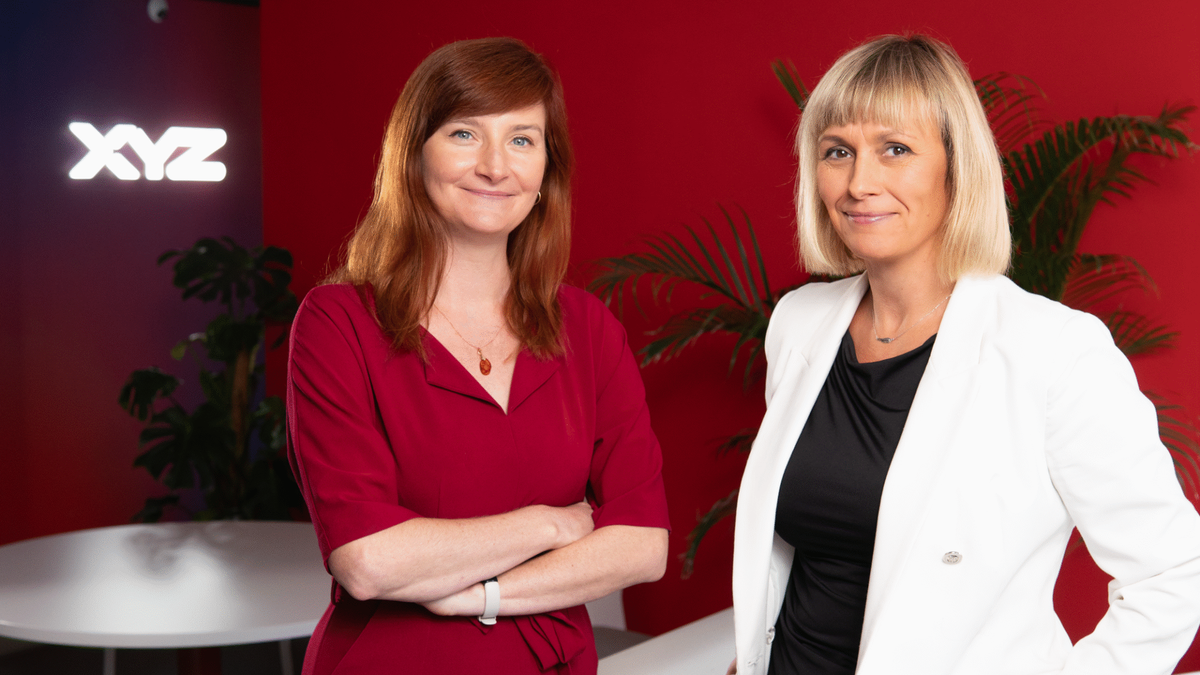
EU recycling regulations are increasingly shaping Poland's packaging market. Anna Sapota, Vice-President of Public Affairs for North-Eastern Europe at the Tomra Group, and Katarzyna Błachowicz, Vice-President of the Circular Economy and Recycling Cluster, discussed business challenges, the role of consumers and the need for legislative change in the XYZ studio.
In this article, you will learn…
- How EU regulations and implementation of extended producer responsibility can change Poland's packaging market and create real demand for recyclate.
- Why systemic tools such as eco-modulation and new legislative instruments are needed to motivate producers and consumers to close material loops.
- How the circular economy can affect everyday habits, business and law, broadening the discussion beyond recycling to reuse, waste prevention and efficient resource use.
The discussion began with an analysis of the new PPWR regulation, which entered into force this year and requires actual rather than merely declared packaging recycling.
The regulation provides for higher recycling rates for packaging waste: the waste we as consumers encounter every day. The journey towards good-quality raw materials starts in our homes, from separate collection through sorting plants and recyclers to manufacturers who use recyclate in ecodesign, explained Katarzyna Błachowicz.
She also emphasised that Poland has made a major leap forward in waste separation over the past 15 years, but further systemic changes, particularly legislative ones, are essential.
Extended producer responsibility: the key to a circular economy?
According to the expert, Poland, as an EU Member State, faces ambitious packaging waste collection and recycling targets while significantly lagging in implementation of extended producer responsibility (EPR).
Legislation was created to organise the waste and raw materials management system and also serves environmental objectives. That is what we are losing sight of in current discussions. We can increase recycling rates, but throughout the value chain we need to ensure a system of supply and demand, emphasised Katarzyna Błachowicz.
In Anna Sapota's view, ongoing legislative work opens the way to a modern system that can close material loops.
We are late in implementing EPR. However, since the PPWR regulation appeared, our perspective is entirely different from two years ago. This is a moment to plan broader action and respond to the challenges facing the packaging market. We need tools that motivate businesses to close material loops and create real demand for recyclate, the expert explained.
Anna Sapota noted that creating a system that closes the loop comprehensively, from ecodesign to ensuring the use of good-quality recyclate, is the greatest challenge today.
From laboratories to industry
The experts stressed that recycling must work in practice and at scale. Materials must therefore be developed that are compatible with collection systems and suitable for industrial processing.
It is not enough for someone in a laboratory to prove that something can be recycled once. We need materials that can be processed industrially, in thousands of tonnes, across Europe, noted Anna Sapota.
This is why systemic tools such as eco-modulation are so important. This means differentiating fees according to how easily packaging can be recycled.
If a producer creates packaging that is difficult to recycle, it will have to pay more. This will affect the product's price and ultimately encourage consumers to choose a more environmentally friendly alternative, explained Anna Sapota.
Until now, financial and legislative instruments motivating producers to use ecodesign have been lacking. We should also consider e-commerce packaging and protective materials. We must examine what enters Europe and monitor figures and data. This will of course affect planning investment in recycling tools, added Katarzyna Błachowicz.
Inspiration from Norway and other countries
The XYZ studio discussion also explored international examples. Norway, home to Tomra, which supplies packaging separation and sorting solutions, is now focusing on recovering raw materials from mixed waste.
Separate collection has operated in the EU for over 20 years. Yet in some markets as much as one-third of plastics still ends up in mixed waste. That is why Norwegians are investing in technologies that also recover raw materials from the black bag, explained Anna Sapota.
Katarzyna Błachowicz emphasised, however, that Poland should not copy outdated solutions.
We are open to good examples, but must develop our own system suited to our market's characteristics and consumer behaviour, said the Vice-President of the Circular Economy and Recycling Cluster.
The circular economy: a vision of the future?
In the second part of the discussion, the experts addressed the broader perspective of the circular economy.
Today we are discussing recycling as well as reducing waste and reusing packaging. This is a challenge for businesses and consumers, but also an opportunity to change habits and benefit the environment in a real way, noted Anna Sapota.
Katarzyna Błachowicz pointed out that the circular economy should be embedded at every legislative level, covering all economic sectors.
We must think more broadly about resources, water, energy and decarbonisation. Europe still lacks legislation on circular products. This gap must be filled as soon as possible, the expert urged.
Consumers, businesses and legislators: three pillars of change
Summing up the discussion, host Martyna Mroczek-Kowalik emphasised that progress towards a circular economy requires cooperation between consumers, businesses and legislators.
We collect and sort waste to create recyclate with a real application, not for the process itself. The greatest challenge is closing the loop and giving raw materials a second life, noted Anna Sapota.
Europe and Poland are on the right path. However, we need systemic and legislative instruments to accelerate these changes, added Katarzyna Błachowicz.
Although Poland's waste management system still faces many barriers, the direction of transformation is clear: building a circular economy in which recycling and reuse become part of everyday life.
A recording of the discussion is available on the XYZ studio website: https://xyz.pl/potrzebujemy-znalezc-instrumenty-ktore-beda-tworzyly-recykling-i-wykorzystaja-produkt-ktory-z-niego-powstanie-jaka-jest-przyszlosc-gospodarki-cyrkularnej-w-polsce/
Key conclusions
Poland must accelerate implementation of extended producer responsibility (EPR), a key tool for meeting EU targets and creating a real market for recyclate.
Laboratory technologies alone are insufficient. Industrial and systemic solutions, including eco-modulation and financial instruments, are needed to motivate producers to adopt ecodesign and limit inflows of packaging that is difficult to recycle.
Transition to a circular economy requires cooperation between consumers, businesses and legislators. A holistic approach is needed, covering recycling as well as waste prevention, product reuse and efficient resource management.