A decade of recycling from the Cluster's perspective
In June 2012, a handful of people's vision of creating a recycling cluster became reality. Recycling, then treated as a marginal activity, is becoming an established part of the sustainable economy and of the Waste Management and Recycling Cluster itself, which holds the respected status of a National Key Cluster.
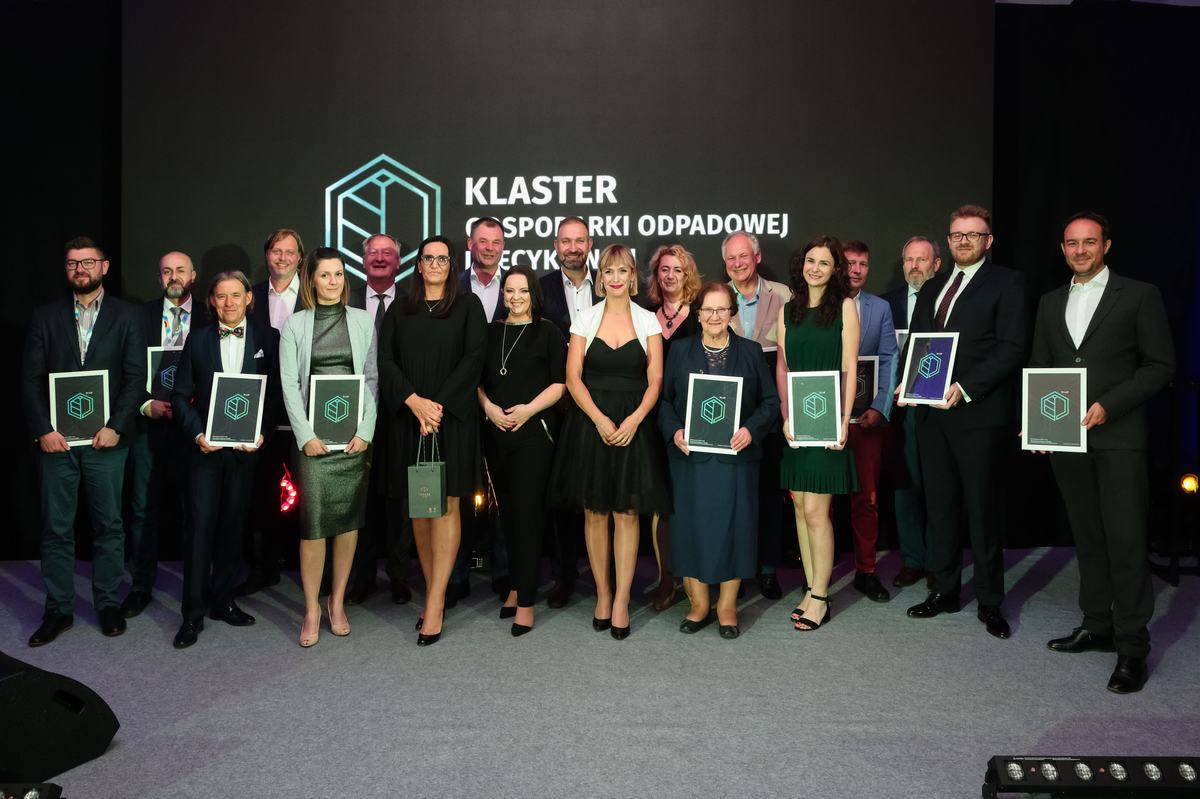
2012 was before the waste management revolution. There was no ban on landfilling high-calorific waste fractions and no shortened waste storage period, so the fires had not yet begun. It was before the 2013 Packaging and Packaging Waste Management Act and the 2015 Waste Electrical and Electronic Equipment Act, when collection targets did not cover all equipment producers. Unfortunately, there was not yet a division into equipment groups or a way to return waste electrical and electronic equipment free of charge. It was also a time of waiting for the Database on Products, Packaging and Waste Management (BDO). Recycling was not associated with positive environmental change, and we did not yet know that the circular economy, green transformation and climate change would revolutionise approaches to accelerated climate protection. We thought extended producer responsibility would soon arrive and finally create a properly functioning, regulated and self-financing waste management system. Nobody anticipated the Single Use Plastics Directive: we were dealing with waste dumped in forests, low collection charges, no obligation to sort waste and the proliferation of stabilised outputs from mechanical-biological treatment plants. It was then, in June 2012, that a handful of people's vision of creating a recycling cluster became reality. Recycling, then treated as marginal, became an established part of the sustainable economy and of the Waste Management and Recycling Cluster itself, with its respected National Key Cluster status. This was only the beginning of the changes to come over the decade. Recycling was still at the top of the waste hierarchy, before falling two places behind reuse and repair after 2014 and the announcement of the circular economy concept. The sharing economy had not yet been described or implemented. Despite dwindling raw material resources, Europe shipped waste to China for possible recovery and recycling. The linear economy was only beginning to come full circle, becoming embedded in the strategic goals and activities of the cluster established a decade earlier. Among other clusters, KGOiR would distinguish itself through waste management, including recycling. Years later, waste would prove to be a cross-sector and cross-cluster issue. We are the ones who know how recycling returns waste to the raw material cycle. Just six years after its establishment, the Cluster received National Key Cluster status, awarded to mature clusters of significant importance to the national economy and high international competitiveness. There were 15 at the time and there are 20 today, but only our Cluster comprehensively addresses waste, recycling and the circular economy. More than 110 members form a unique ecosystem. The Ministry of Economic Development and Technology's National Key Cluster selection system assesses five areas: human, infrastructure and financial resources; the cluster's economic potential; knowledge creation and transfer; support for public policies; and customer orientation. The Ministry considers clusters among the keys to competitiveness in an economy increasingly based on research, development and innovation, and on the ability to rapidly absorb, create and develop new technologies. Through naturally established cooperation between businesses, research institutions, business support organisations, non-governmental organisations and local authorities, they are described as catalysts for innovation.
International projects supporting business innovation undoubtedly help implement new ideas. MINE.THE.GAP has been a success, with Polish companies using the available voucher funding of EUR 50 thousand. GreenOffshoreTech (H2020) offers maximum support of EUR 60 thousand. It aims to help SMEs develop new products, processes or services for green offshore production and transport and increase cross-sector innovation among groups of SMEs from different industries. Further Cluster products available to businesses result from the ClusterLab project: services for digital transformation and the circular economy, and the only certification in this field under the KNR Green standard. Within the Cluster, our ideas and innovations place us one step ahead of emerging and implemented legislation, including the European Green Deal. This entails risk and investment preparation, but what matters is the environment and the tangible contribution our activities make to greening the economy and protecting the environment.
Katarzyna Błachowicz
Vice-President of the Cluster Coordinator's Management Board and Management Board Member of the Waste Management and Recycling Cluster, a National Key Cluster
This opinion column was published in the monthly magazine ‘ENERGIA I RECYKLING’ in June 2022.